

Jaw pain can feel scary, especially when it appears suddenly. One minute you’re eating normally, and the next your jaw feels sore, tight, or painful on one side. The good news is that many cases are linked to simple causes like teeth grinding, stress, chewing too much, or jaw joint irritation. But sometimes jaw pain can also come from dental infections, sinus pressure, injury, or, rarely, a more serious health problem.
This guide explains why your jaw hurts, how to spot common causes, what the 3-finger test for jaw pain means, and how to relieve a jaw ache safely at home.
Why Is My Jaw So Sore All of a Sudden?
Sudden jaw soreness often happens when the jaw muscles or jaw joint become overloaded. This can happen after chewing hard food, clenching your teeth, grinding at night, yawning widely, or sitting with poor posture for hours. The jaw joint, called the TMJ, works like a sliding hinge and connects your lower jaw to your skull. TMJ problems can cause pain in the jaw joint and nearby muscles.
Stress is another big reason. Many people clench their teeth without noticing, especially while working, driving, or sleeping. Your jaw muscles then stay “switched on” for too long. By morning, you may feel jaw ache, a headache, ear pain, or tightness around your cheeks.
Why Does My Jaw Hurt on One Side?
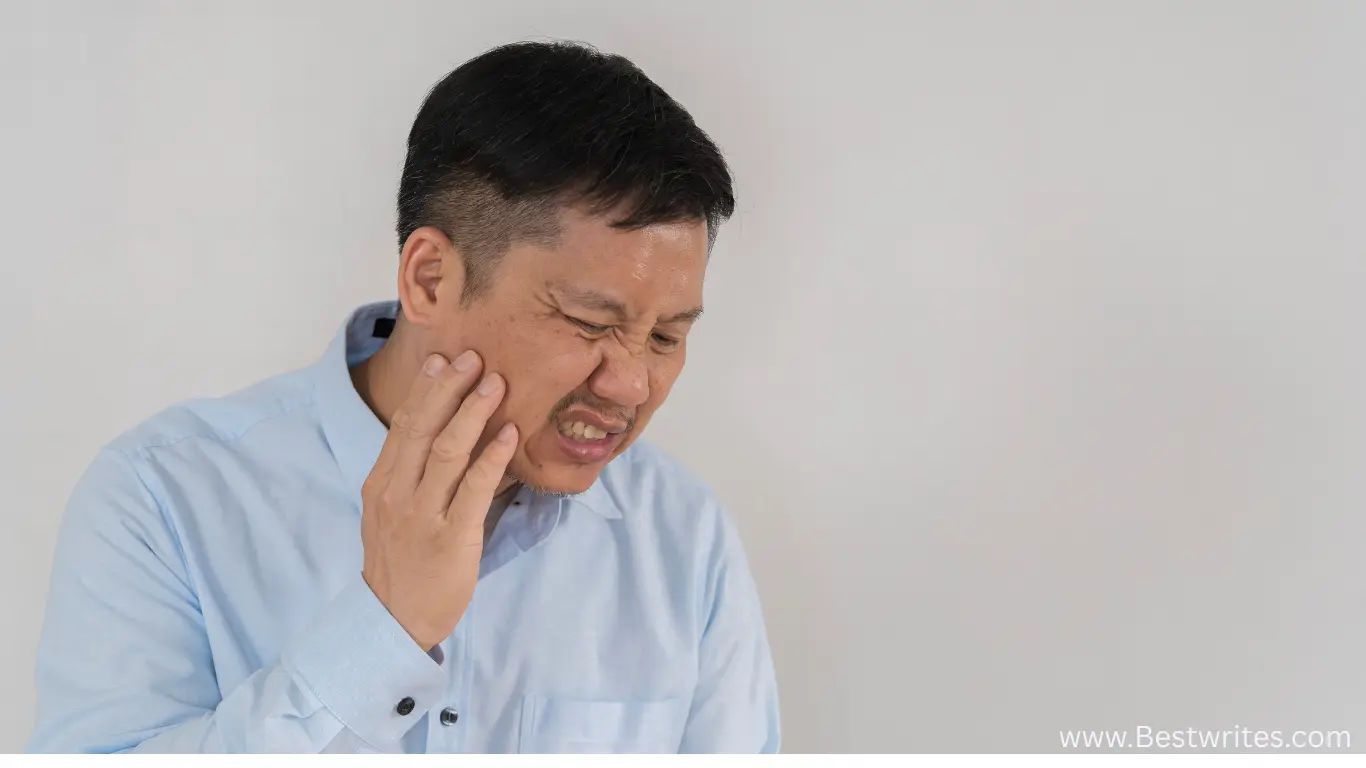
One-sided jaw pain can happen for several reasons. It may be linked to chewing mostly on one side, a sore tooth, gum infection, wisdom tooth irritation, sinus pressure, or TMJ strain on that side. If the pain gets worse when biting, chewing, or touching a tooth, a dental issue is more likely.
If the pain is near the ear and comes with clicking, popping, locking, or trouble opening your mouth, TMJ disorder may be involved. NHS guidance lists jaw pain, difficulty opening the mouth, jaw locking, clicking, popping, and pain around the ear or side of the head as common warning signs that may need medical or dental advice.
What Is the 3-Finger Test for Jaw Pain?
The 3-finger test is a simple way to check jaw opening. Place three fingers vertically between your upper and lower front teeth. If you can fit them comfortably, your jaw opening is usually within a normal range. If you can’t, or it causes pain, stiffness, or locking, your jaw movement may be restricted.
This test doesn’t diagnose the cause, but it can help you decide whether to seek help. If your jaw is locking, opening is getting worse, or you can’t eat or drink properly, don’t ignore it.
How to Relieve a Jaw Ache at Home
For mild jaw pain, start by giving your jaw a break. Eat soft foods, cut food into small pieces, avoid chewing gum, and avoid hard or chewy foods for a few days. Heat packs, gentle massage, relaxation techniques, and avoiding nail biting or jaw clenching may help. The American Dental Association also suggests soft foods, avoiding gum, heat packs, and relaxation to reduce jaw tension.
You can also try this simple habit: lips together, teeth apart, tongue resting gently on the roof of your mouth. It sounds too easy, but it reminds your jaw to relax. Your teeth are not meant to be best friends all day.
When Jaw Pain May Be Dental
Jaw pain can come from the teeth, not just the joint. Tooth decay, abscess, cracked teeth, gum disease, wisdom teeth, or recent dental work can all cause pain that spreads into the jaw. Dental pain often feels sharp, throbbing, or worse with hot, cold, or sweet foods or biting.
See a dentist if you notice swelling, bad taste, fever, pus, severe tooth sensitivity, or pain that keeps you awake. Painkillers may hide symptoms, but they won’t fix an infection.
When to Get Urgent Help
Get urgent advice if you can’t eat or drink; your jaw locks; you can’t open your mouth properly; pain is severe; or you have vision problems, a severe headache, scalp tenderness, or pain at the side of your head. NHS guidance recommends urgent help for several of these symptoms.
Also seek emergency help if jaw pain comes with chest pain, shortness of breath, sweating, nausea, or pain spreading to the arm, neck, or back. Jaw pain can rarely be linked to heart problems, especially if it appears with these symptoms.
FAQs
Why is my jaw so sore all of a sudden?
It may be from clenching, grinding, stress, chewing hard food, TMJ irritation, dental pain, or sinus pressure.
How to relieve a jaw ache?
Rest your jaw, eat soft foods, avoid gum, use warm compresses, massage gently, and reduce clenching.
Why does my jaw hurt on one side?
One-sided pain may come from TMJ strain, a tooth problem, a gum infection, a wisdom tooth, a sinus issue, or chewing mostly on one side.
What is the 3-finger test for jaw pain?
It checks if you can open your mouth wide enough to fit three fingers vertically between your front teeth. If not, your jaw may be restricted.
Conclusion
Jaw pain can feel uncomfortable and worrying, but in most cases it has a simple cause like stress, teeth grinding, overuse, or a mild TMJ issue. By understanding why your jaw hurts—whether it’s sudden soreness, one-sided pain, or limited movement—you can take the right steps early. Small changes like resting your jaw, avoiding hard foods, and managing stress can make a big difference within a few days.
However, don’t ignore ongoing or severe symptoms. If your pain doesn’t improve, gets worse, or comes with swelling, fever, or difficulty opening your mouth, it’s important to seek professional advice. A dentist or GP can help identify the exact cause and prevent it from turning into a bigger problem. Listening to your body early is the smartest way to protect your jaw health.

- Medical training, Dow Medical College, Karachi, Pakistan, 2006
- Internal Medicine Residency, Guthrie Robert Packer Hospital, Sayre, PA, 2013
- Infectious Diseases Fellowship Training, The Ohio State University, Columbus, OH, 2015
CERTIFICATIONS
- Diplomate American Board of Internal Medicine, 2013