
BI-RADS 4 Explained: What It Means and What to Do Next
Receiving a letter that says your mammogram results are “abnormal” and include the term BI-RADS 4 can trigger immediate, intense fear. You may worry about the worst-case scenario and urgently search for answers: Is BI-RADS 4 always cancer?
The brief answer is no. A BI-RADS 4 result does not mean you have cancer. It simply means the radiologist saw something concerning that needs further investigation. The overwhelming majority of these findings turn out to be benign. This article will explain what BI-RADS 4 really means, what the next steps are, and why early detection gives you the best possible outcomes.
What the BI-RADS System Actually Represents for Early Detection
Radiologists use the Breast Imaging Reporting and Data System (BI-RADS classification) to describe and sort the results of breast imaging tests like mammograms, ultrasounds, and MRIs. It makes sure that reports from different facilities are always the same, which makes it easier for doctors to understand your mammogram results and suggest the right follow-up tests.
The system uses a set of BI-RADS categories, ranging from 0 to 6, to assign a probability of malignancy:
- BI-RADS 0: Incomplete assessment (needs more imaging).
- BI-RADS 1: Negative (normal finding).
- BI-RADS 2: Benign (non-cancerous finding).
- BI-RADS 3: Probably benign (less than a 2% chance of cancer; usually requires short-term follow-up).
- BI-RADS 4: Suspicious abnormality (requires a biopsy). This is where we focus.
- BI-RADS 5: Highly suggestive of malignancy (at least a 95% chance of cancer).
- BI-RADS 6: Known biopsy-proven malignancy (used after diagnosis).
How Radiologists Interpret a BI-RADS 4 Result

A BI-RADS 4 result is designated when a radiologist sees a suspicious mammogram finding—an area that doesn’t look clearly benign but doesn’t have the classic characteristics of an aggressive cancer either. This is why it is often described as having a suspicion of malignancy that is high enough to warrant a definitive tissue sample.
The features leading to a BI-RADS 4 can include:
- New areas of calcification (tiny calcium deposits).
- A solid mass with irregular or ill-defined borders.
- Breast asymmetry (a difference in density between the breasts).
- An architectural distortion (where the normal structure of the breast tissue is pulled).
For a patient, this means the abnormality cannot be confidently classified as benign, and the doctor needs more information than an image can provide to ensure accurate breast cancer detection.
Understanding BI-RADS 4 Subcategories (4A, 4B, 4C)
To better refine the risk and guide the diagnostic process, the BI-RADS category 4 and cancer risk are further divided into three subcategories. This is a critical distinction because it shows that not all BI-RADS 4 findings carry the same level of concern.
| BI-RADS Subcategory | Probability of Malignancy (Cancer Risk) | Description/Action |
| BI-RADS 4A | Low (2% to 10%) | The finding has a low but non-zero chance of being cancerous. The recommendation is usually a biopsy, but it is highly likely to be a benign process. |
| BI-RADS 4B | Intermediate (11% to 50%) | The finding has an intermediate, moderate chance of being cancer. Further evaluation through a biopsy is strongly recommended. |
| BI-RADS 4C | Moderate to High (51% to 95%) | The finding is the most concerning within Category 4, possessing characteristics that are leaning toward malignancy but not as classic as Category 5. Suspicion of malignancy is significant. |
The key takeaway is that even in the highest subcategory, 4C, up to 49% of the findings are still benign.
Why a BI-RADS 4 Finding Needs Further Testing and Biopsy
Because BI-RADS 4 always indicates cancer is false, the purpose of the follow-up is to determine, once and for all, if the abnormality is benign or malignant. The most common next step is a breast biopsy, where a small sample of tissue is removed and analyzed by a pathologist.
Imaging tests, such as a mammogram of a cancerous breast, can only show structure and density. They cannot definitively tell a doctor whether the cells are cancerous. The biopsy is the gold standard for definitive diagnosis.
- Diagnostic Tests frequently used alongside a mammogram include an Ultrasound and, in some cases, a Breast MRI, to get a clearer picture before the biopsy is performed.
What Influences the Cancer Probability
The overall cancer risk assessment for a BI-RADS 4 result is influenced by two main factors:
- The Imaging Characteristics: Is the mass solid or cystic? Is it smooth or jagged? Are the microcalcifications clustered or scattered? These features heavily dictate whether the finding lands in 4A, 4B, or 4C.
- Your Clinical Context: Your personal risk factors, such as age, prior breast biopsies showing atypical cells, and a significant family history of breast cancer, can make a radiologist lean toward a more aggressive follow-up, even for less concerning imaging features.
How Often Are BI-RADS 4 Mammograms False Positives
A false positive occurs when a diagnostic test, like a mammogram, suggests a problem (a BI-RADS 4) that turns out not to be cancer upon definitive testing (the biopsy).
The combined false positive rates for the entire BI-RADS 4 category are very high. Across all three subcategories (4A, 4B, 4C), approximately 70% to 80% of all BI-RADS 4 findings are found to be benign after a biopsy.
This is reassuring news. When you hear the statistic, “What percentage of BI-RADS 4 is cancer,” remember that the odds are significantly in favor of a benign result, meaning the finding is not cancer.
Can a BI-RADS 4 Result Be a False Negative?
A false negative is a situation where the imaging or diagnostic test misses an existing cancer. When a finding is categorized as BI-RADS 4 and a biopsy is performed, the chance of the biopsy missing the cancer (a false negative) is very low, typically less than 1-2%, provided the biopsy was performed with imaging guidance (like ultrasound or stereotactic guidance) and the lesion was accurately targeted.
This is why the subsequent breast biopsy is so important—it virtually eliminates the concern of a missed diagnosis. If the biopsy is BI-RADS 4 biopsy negative, the initial suspicious lesion has been ruled out as cancerous.
How Your Personal Risk Profile Changes BI-RADS 4 Outcomes for Early Detection
Your personal risk factors matter. While a BI-RADS 4 finding might be benign for most people, a patient with established high risk (e.g., a known BRCA gene mutation, prior chest radiation, or dense breasts) may be treated with greater caution.
For these individuals, the existence of a breast abnormality, even one classified as BI-RADS 4A, may necessitate more rigorous surveillance or an expedited transition to a biopsy, due to an elevated baseline risk of cancer development. This shows a proactive approach to early detection based on a full cancer risk assessment.
What Usually Happens After a BI-RADS 4 Mammogram
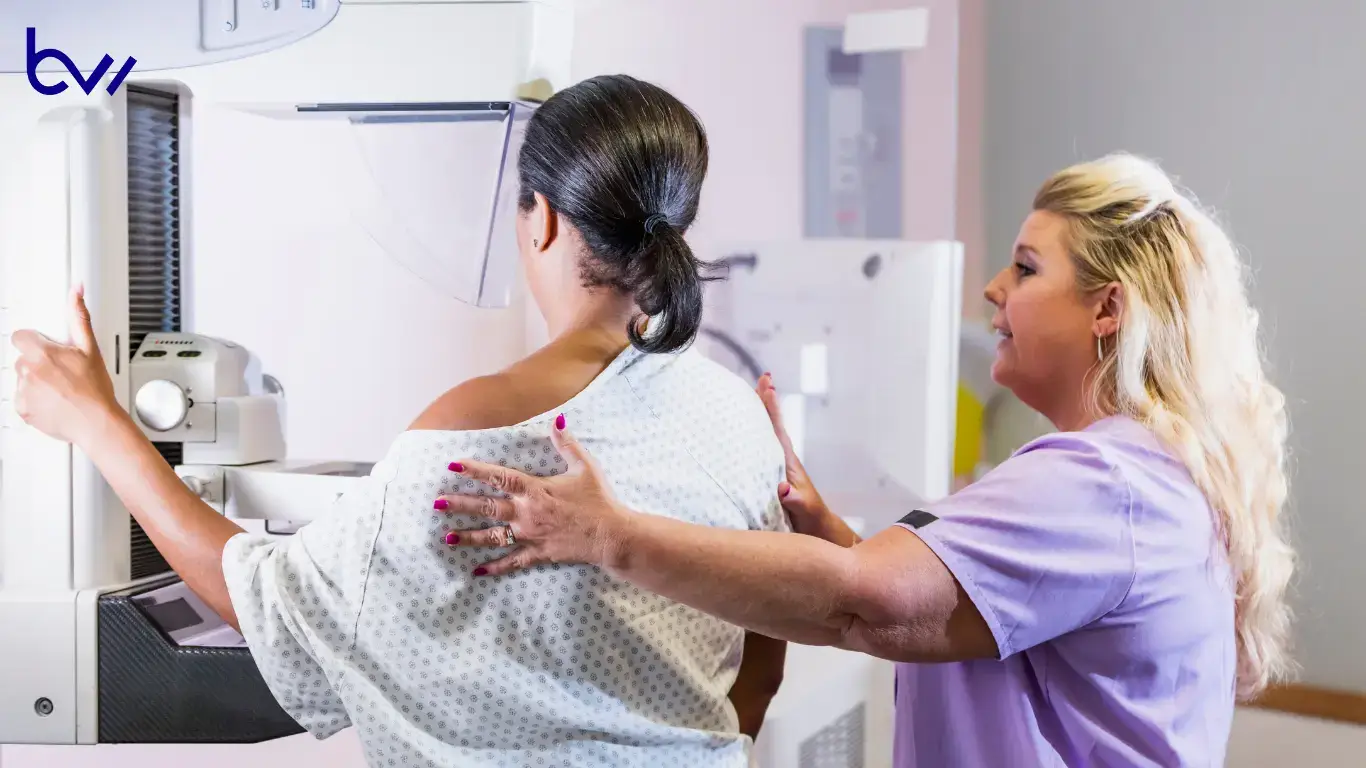
After a BI-RADS 4 result, the standard clinical pathway is direct:
- Further Imaging: Often, this means a targeted Ultrasound or a special “spot compression” mammogram view to get a better look at the area.
- Biopsy Recommendation: You will be referred for a core needle biopsy. This is usually an outpatient procedure done with a local anaesthetic.
- Pathology Review: The tissue samples are sent to the lab. This is the only way to know if BI-RADS 4 is always cancer.
- Results and Next Steps:
- Biopsy Negative: The finding is benign (not cancer). You return to routine regular mammogram screenings.
- Biopsy Positive: The finding is malignant. You meet with a specialist (oncologist/surgeon) to discuss BI-RADS 4 treatment.
Understanding BI-RADS Categories Beyond 4
While your current focus is on BI-RADS 4, knowing about the surrounding categories can help contextualize your result.
- BI-RADS 3 is a truly low-concern category, where the cancer risk is <2%. It is generally managed with a 6-month follow-up imaging, not a biopsy.
- BI-RADS 5 is the category that is nearly always cancer. When someone asks, “Is BI-RADS 5 always cancer,” the answer is, for all practical purposes, yes. This is a very different level of concern than BI-RADS 4.
Ways to Monitor and Reduce Your Breast Cancer Risk
While you await your diagnosis, focus on manageable steps for your overall breast health monitoring:
- Maintain a Healthy Lifestyle: Regular exercise and a balanced diet (low in processed foods, high in fruits/vegetables) can help reduce overall risk.
- Know Your Breasts: Be aware of any changes in feel or appearance.
- Discuss History: Talk to your doctor about your complete family history of breast cancer and personal risk factors.
How AI Reduces Unnecessary BI-RADS 4 Biopsies
The field of radiologist interpretation is rapidly evolving with the use of Artificial Intelligence. AI tools are becoming better at identifying the subtle characteristics that distinguish a truly suspicious finding (4C) from a likely benign one (4A).
By helping radiologists more accurately assign a subcategory, AI aims to reduce the false positive rates of the overall BI-RADS 4 category, potentially preventing many patients from needing a biopsy for a harmless finding.
When to Get a Second Opinion or See a Breast Specialist
If your BI-RADS 4 finding is highly complex, if you have very dense breast tissue, or if your radiologist’s interpretation is conflicting with your clinical history, it is completely reasonable to seek a second opinion. A breast specialist or breast surgeon is often the best person to oversee your diagnostic process after an abnormal mammogram to ensure the most appropriate and timely testing is performed.
What BI-RADS 4 Really Means for You
The answer to the initial question, Is BI-RADS 4 always cancer, is a firm and reassuring no.
A BI-RADS 4 result is not a diagnosis of cancer; it is a request for clarity. It signifies that your doctor is being thorough, cautious, and committed to early detection. You have been identified at a stage where, if cancer is present, it is often small and highly treatable.
Please hold onto this fact: Most BI-RADS 4 findings are benign. The best action you can take right now is to schedule your follow-up procedure without delay, knowing that you are on the path to a definitive answer and the best possible outcome.
FAQ:
What are the next steps after a BI-RADS 4 result?
The immediate next step is usually a referral for an image-guided breast biopsy (core needle biopsy). This procedure will obtain a small tissue sample from the suspicious area. This sample is then analyzed by a pathologist to determine if the cells are benign or malignant.
What is the treatment for BI-RADS 4?
BI-RADS 4 treatment is not an actual cancer treatment; it is a diagnostic pathway. The “treatment” is typically a breast biopsy to determine if cancer is present. If the biopsy is negative (BI-RADS 4 biopsy negative), no further treatment is needed. If the biopsy is positive for cancer, the treatment (surgery, radiation, chemotherapy, etc.) will be determined by a breast specialist based on the specific type and stage of cancer found.
Should I be worried about BI-RADS 4?
It is natural to be worried, but you should not panic. BI-RADS 4 is a suspicious finding, but statistically, it is more likely to be benign than malignant. The term simply means a biopsy is needed to confirm the diagnosis because the abnormality could not be confidently dismissed as harmless. Focus your energy on scheduling and attending your next diagnostic step, which will provide the final, definitive answer.
What is a suspicious lesion in BI-RADS 4?
A suspicious lesion is a general term for a breast abnormality seen on imaging. It could be an irregular solid mass, an area of clustered microcalcifications, or a focal asymmetry (How often is breast asymmetry cancer? It is low, but it still warrants investigation). A radiologist classifies it as “suspicious” because it lacks the clearly benign features of a BI-RADS 2 or 3 finding.
Can a BI-RADS 4 biopsy be negative?
Yes, absolutely. The majority of BI-RADS 4 biopsies are negative. This means the tissue sample shows no cancer, and the initial suspicious finding was benign (non-cancerous). This is the expected and most common result.
Is BI-RADS 4 dangerous?
No, Is BI-RADS 4 dangerous is the wrong question. BI-RADS 4 is a classification of a finding, not a disease. It signals a potential danger (cancer) that needs to be definitively checked. By leading you to a biopsy for early detection, the BI-RADS 4 classification is actually safeguarding your health.
Can a radiologist tell if it is cancer?
A radiologist can’t say for sure that a BI-RADS 4 finding is cancer just by looking at the pictures. The pictures show a suspicious area, but only a biopsy can tell for sure if the cells are cancerous or not. This is why a biopsy is the best way to find out what’s wrong and why follow-up testing is so important for finding problems early.
What stage of cancer is BI-RADS 4?
BI-RADS 4 is not a stage of cancer. The BI-RADS system is a risk assessment tool used before a diagnosis is made. Cancer staging (Stage 0, I, II, III, IV) only occurs after a biopsy confirms malignancy. If a BI-RADS 4 finding is cancer, it is often found in an early, highly curable stage due to the proactive follow-up.
Final Words
A BI-RADS 4 result can be stressful, but it doesn’t mean you have cancer. Most of the results are not serious, and a biopsy is the most important step to make things clear. Staying calm, following up quickly, and knowing your own risk factors are the best ways to find out about problems early and get the best results.

- Medical training, Dow Medical College, Karachi, Pakistan, 2006
- Internal Medicine Residency, Guthrie Robert Packer Hospital, Sayre, PA, 2013
- Infectious Diseases Fellowship Training, The Ohio State University, Columbus, OH, 2015
CERTIFICATIONS
- Diplomate American Board of Internal Medicine, 2013